Why Sleep Is the Most Overlooked Factor in Losing Weight
A single night of short sleep changes three separate hormone pathways at once. Chronic short sleep does far more. Here's why the people who struggle most with weight are often the ones sleeping least — and what the research says you can do about it.
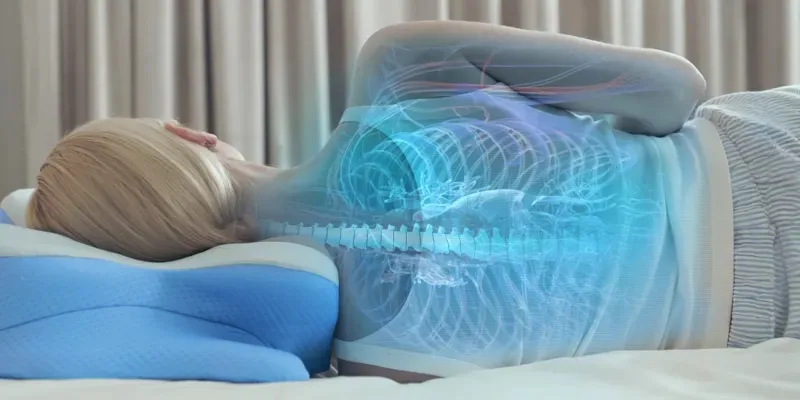
If you are trying to lose weight and you regularly sleep fewer than six hours a night, you are making your job harder than it needs to be. That isn't a motivational slogan. It is what the data shows in controlled laboratory studies, in large population surveys, and in the endocrinology of hunger hormones.
The most frustrating part: it is almost always the easiest thing to fix.
What happens in a single short night
In a 2004 University of Chicago study, healthy adults restricted to four hours of sleep for two consecutive nights saw their levels of ghrelin — the hormone that tells your brain you are hungry — rise by 28%. Their levels of leptin — the hormone that tells your brain you are full — dropped by 18%.
The participants were not asked to change their activity, their diet, or anything else. Their bodies simply started shouting for more food, and quieter for enough.
You are not eating more because you are weak. You are eating more because your bloodstream is telling you to.
What chronic short sleep does
One night is measurable. Six months of six-hour nights is something different entirely. In long-duration studies, chronic short sleep has been associated with:
- A 30 to 55% higher risk of developing obesity over the following years
- Preferential storage of visceral fat — the kind that sits around the organs
- Reduced insulin sensitivity, meaning carbohydrates are stored as fat more efficiently
- A documented preference, in fMRI scans, for high-calorie foods over nutrient-dense ones
- Lower levels of daytime physical activity, even when no change is intended
The last one is the quiet killer. People who sleep less move less during the day, without even noticing. They take fewer steps, fidget less, and produce less spontaneous movement. Over a year, that accounts for a substantial portion of the weight gain seen in short sleepers.
The cortisol angle
Sleep deprivation raises cortisol, the stress hormone. Chronically elevated cortisol encourages the body to store fat around the midsection and break down muscle for fuel — the exact opposite of what most people trying to lose weight want.
This is why two people eating the same calories, working out the same amount, but sleeping very differently, often end up with very different bodies.
The good news
Unlike most variables in weight loss, sleep is surprisingly responsive. Most of the hormonal effects reverse within a week of consistent 7 to 8 hour nights. You don't need to become a sleep monk. You just need to stop sabotaging yourself.
Practical fixes that actually work
- Fix your wake time first. Same time every day, weekends included. Your body clock calibrates from the wake signal, not the bed signal.
- No caffeine after noon. The half-life is 5 to 7 hours. A 3 p.m. coffee is still in your bloodstream at midnight.
- Cool the room. 18°C / 65°F is the sweet spot for most people. Warmer rooms mean lighter sleep.
- Protect the last 90 minutes. No bright screens, no stimulating content, no arguments. Give your nervous system a landing strip.
- Alcohol is not a sleep aid. It accelerates falling asleep and destroys the quality of the sleep that follows. Your deep sleep takes a hit for up to 8 hours.
If snoring is part of the picture
Loud, chronic snoring with morning headaches and daytime sleepiness is worth discussing with a doctor — it can be a sign of obstructive sleep apnea. Untreated apnea is strongly associated with weight gain, high blood pressure, and cardiovascular risk. Proper diagnosis matters.
Before you start the next diet, count your hours. If they aren't there, nothing else will work as well as it could.
This article is for informational purposes only and is not a substitute for professional medical advice.
← Back to homepage